
Our position paper on the Commission’s legislative proposal amending the CBAM proposes an opt-in solution to CBAM circumvention and complexity.
Our position on the Commission’s legislative proposal amending the CBAM
Enabling opt-in for systematic default values
To address this problem for products and countries where such risk exists, emissions reporting could be based on default values more systematically, i.e. attributing the same emission intensity to all products of the same type manufactured in a given country, based on the country average.
The CBAM will be more effective, if implemented in a cooperative way. To secure cooperation from third countries, the systematic use of default values could apply based on an opt-in basis (at country level) and rewarded by lower default values, reflective of country averages (with no mark-ups) rather than punitive ones.
Opting for systematic default values would provide multiple benefits to third countries:
- Reduced transaction costs: Not having to set up monitoring plans, trace information internally and externally along the supply chain, create monitoring reports and pay for third party verification would save time and resources.
- No verification risk: The identity and number of accredited verifiers is still uncertain, and accredited verifiers will likely struggle to meet the demand from importers in a tight schedule. In addition, the verification process is extended by the chain of precursors involved in each type of goods. Not requiring verification fully mitigates exposure to such a verification risk.
- No volume risk: The actual amount of emitted emissions is uncertain and can only be verified long after the goods are sold, and the transmission of this risk along value chains makes this exposure less manageable. Opting for systematic default values and not requiring verification mitigates such volume risk.
- Fairer competition: By reducing fixed costs and the level of default values, the systematic use of lower default values would affect importers of smaller quantities of goods less disproportionately than actual data, allowing for fairer competition between exporters of the same country.
- No data disclosure: By only using default values, no information on technology, production route, amounts, inputs and activity volumes would need to be shared with independent verifiers.
The systematic use of default values would also bring climate benefits. By better protecting against carbon leakage, it would enable the EU to steadily step up its climate ambition. Using default values that reflect country averages would create incentives for countries of origin to reduce their overall emissions rather than just reallocating them from EU imports to other markets. The CBAM regulation could be amended as shown in Annex 1 to enable this opt-in regime.
Enabling opt-in for systematic default values
Phasing out free allocation and phasing in of the CBAM in the EU will inevitably lead to a steady increase in the price of covered goods over the coming years, as EU importers look to pass on the cost of importing covered goods. It is therefore important to consider the impact of the CBAM on downstream goods not currently covered in the CBAM scope which may be impacted, including the agri-food industry which is downstream of fertilisers. Products including beef, rice, plant-based fibres, cereals, wheat, and vegetable oils have already been touted as potential candidates. While calculating the embedded emissions of these agri-food products will present challenges, the Commission should be proactive in carrying out such an assessment. This is especially relevant to consider in the context of the potential introduction for carbon pricing of emissions from agriculture in the EU, as the European Scientific Advisory Board on Climate Change (ESABCC) recently recommended.
Additionally, chemicals which are downstream of hydrogen and ammonia are currently outside the scope of the CBAM. As free allocation is phased out and the CBAM is phased in for hydrogen and ammonia, the cost of production in the EU will increase, presenting a risk of carbon leakage for downstream products which are not currently protected by the CBAM. The Commission should therefore look to include these downstream value chains as a matter of urgency, along with other key value chains, as we recently recommended.
Read our suggested changes to the CBAM regulation in our position paper.
Related publications
More on the CBAM
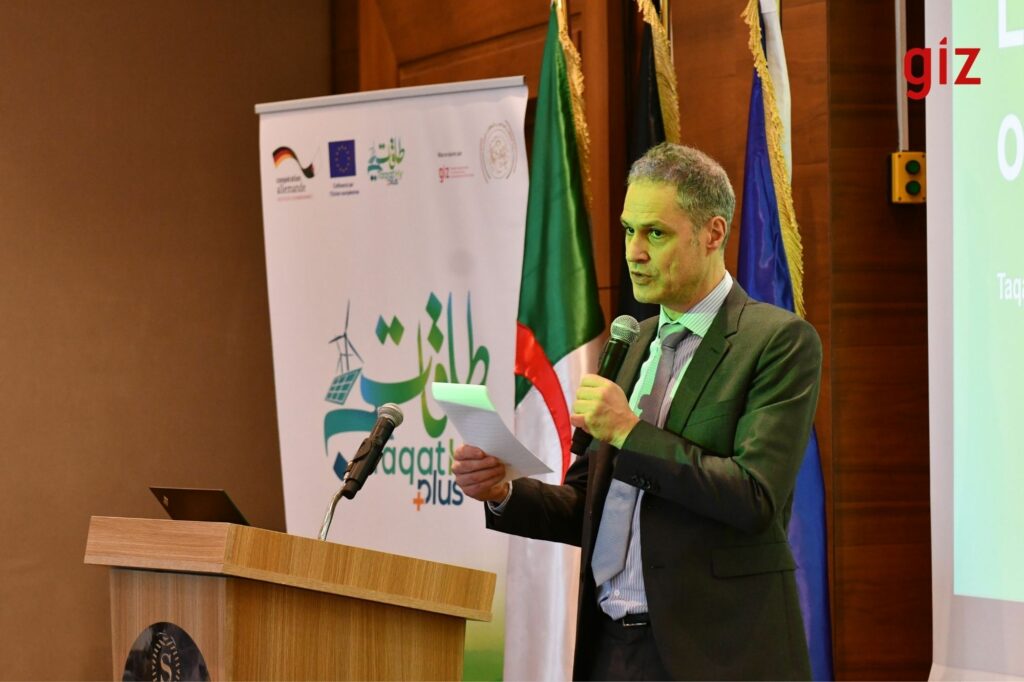
The EU CBAM gives a boost to Algeria’s iron exports
Sandbag’s brief assesses how the EU Carbon Border Adjustment Mechanism (CBAM) may affect Algeria’s iron and steel exports. It finds that although Algeria’s overall exposure to CBAM is limited, rising EU carbon costs are likely to increase EU market prices, with implications for the revenues and competitiveness of Algerian exports.
CBAM and Fertiliser Inflation in 2026: The facts behind the numbers
Estimates suggesting that the EU’s Carbon Border Adjustment Mechanism (CBAM) could increase fertiliser prices by up to 30% have brought a central question into focus: how significant is the inflationary impact likely to be?
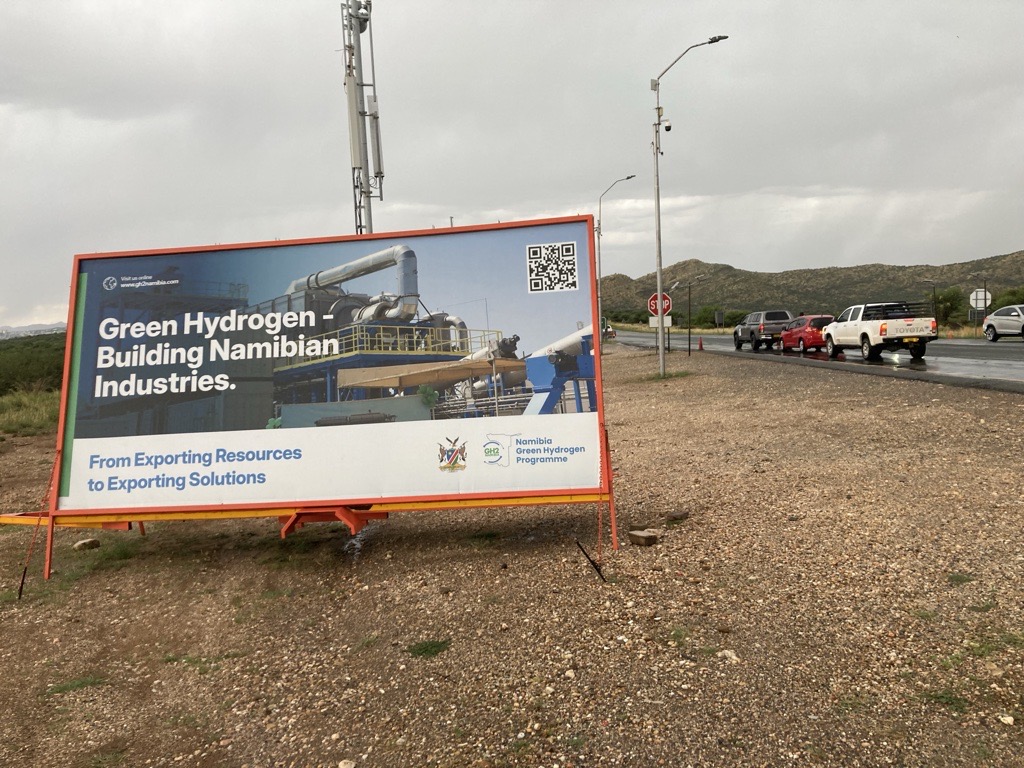
The CBAM dividend for Namibia and Ghana
This research note shows that Namibia and Ghana are likely to benefit from the CBAM, as EU price increases linked to the EU ETS outweigh CBAM fees under current exports. It also sets out transparent transformation scenarios, based on announced industrial projects, to show how expanded and lower-emissions production could further increase export revenues over time.
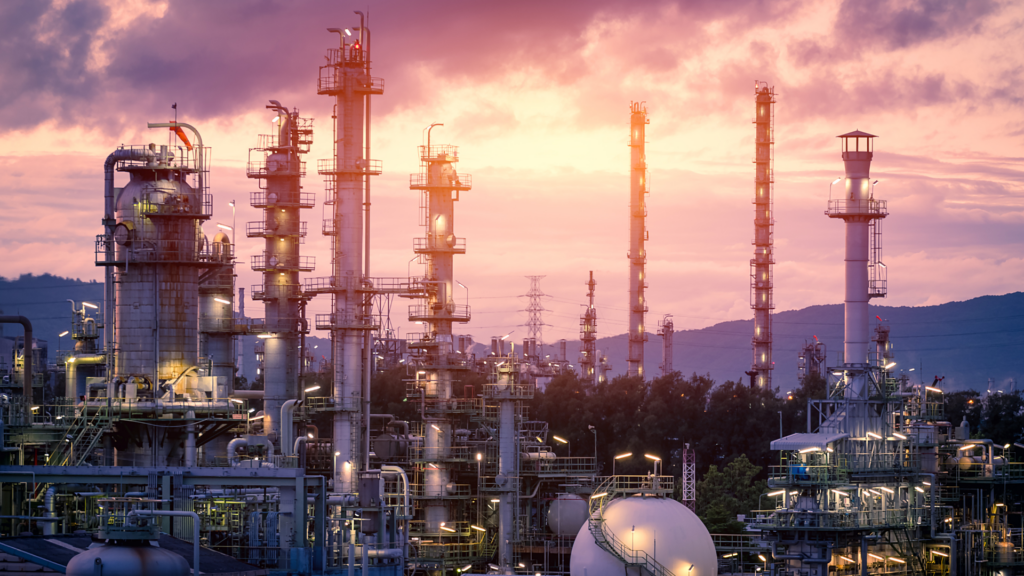
Chemicals in the CBAM: Time to step up
Sandbag’s latest brief explains why the EU CBAM must be expanded to cover key chemical value chains. With chemicals and refinery products responsible for 30% of industry emissions, phased inclusion is critical to prevent carbon leakage and phase out free allowances.
The EU CBAM: a two-way street between the EU and Africa
The Carbon Border Adjustment Mechanism CBAM is often misunderstood as a trade policy whereas it is actually a climate policy. Its only objective, as stated in Article 1 of the CBAM Regulation, is to replace the current system of free allocation of emission allowances to EU-based manufacturers under the EU carbon market.
Sandbag’s Response to the CBAM Calls for Evidence
Sandbag has submitted responses to the EU's CBAM calls for evidence, addressing emissions reporting, adjustment for free allocation, and carbon prices paid abroad. We highlight risks such as loopholes and unequal treatment, and propose practical solutions to strengthen CBAM’s effectiveness and fairness.
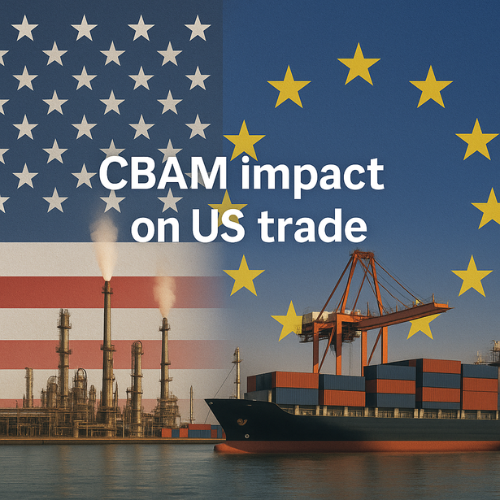
CBAM impact on US trade: an analysis
Sandbag’s September 2025 research note explores the impact of the EU’s CBAM on US exports. It finds that even with expanded scope, the financial impact remains marginal, and US carbon pricing could turn net costs negative.
The EU CBAM: A Two-Way Street to Climate Integrity?
Supported by the Konrad-Adenauer-Stiftung, Sandbag’s report examines the impact of the EU’s Carbon Border Adjustment Mechanism (CBAM) and the gradual removal of free allowances on third-country exporters. The joint implementation is expected to raise production costs for both EU and non-EU producers, leading to higher prices for CBAM-covered goods in the EU.
Strengthening the CBAM — by default
The consultation aims to address concerns that the CBAM has loopholes that could distort competition between products manufactured in the EU (covered by the EU ETS) and imported goods. Our response sets out proposals for how the design of the CBAM could be improved in these regards.
Extending the CBAM to indirect emissions
The European Commission is considering amending the Carbon Border Adjustment Mechanism (CBAM) to include indirect emissions of CO2 from the use of electricity in the manufacturing of CBAM-covered goods.