

The EU’s Carbon Border Adjustment Mechanism (CBAM) aims to ensure that imported goods face the same carbon costs as those produced in Europe.
As CBAM enters its next phase, the European Commission asked for input on three areas:
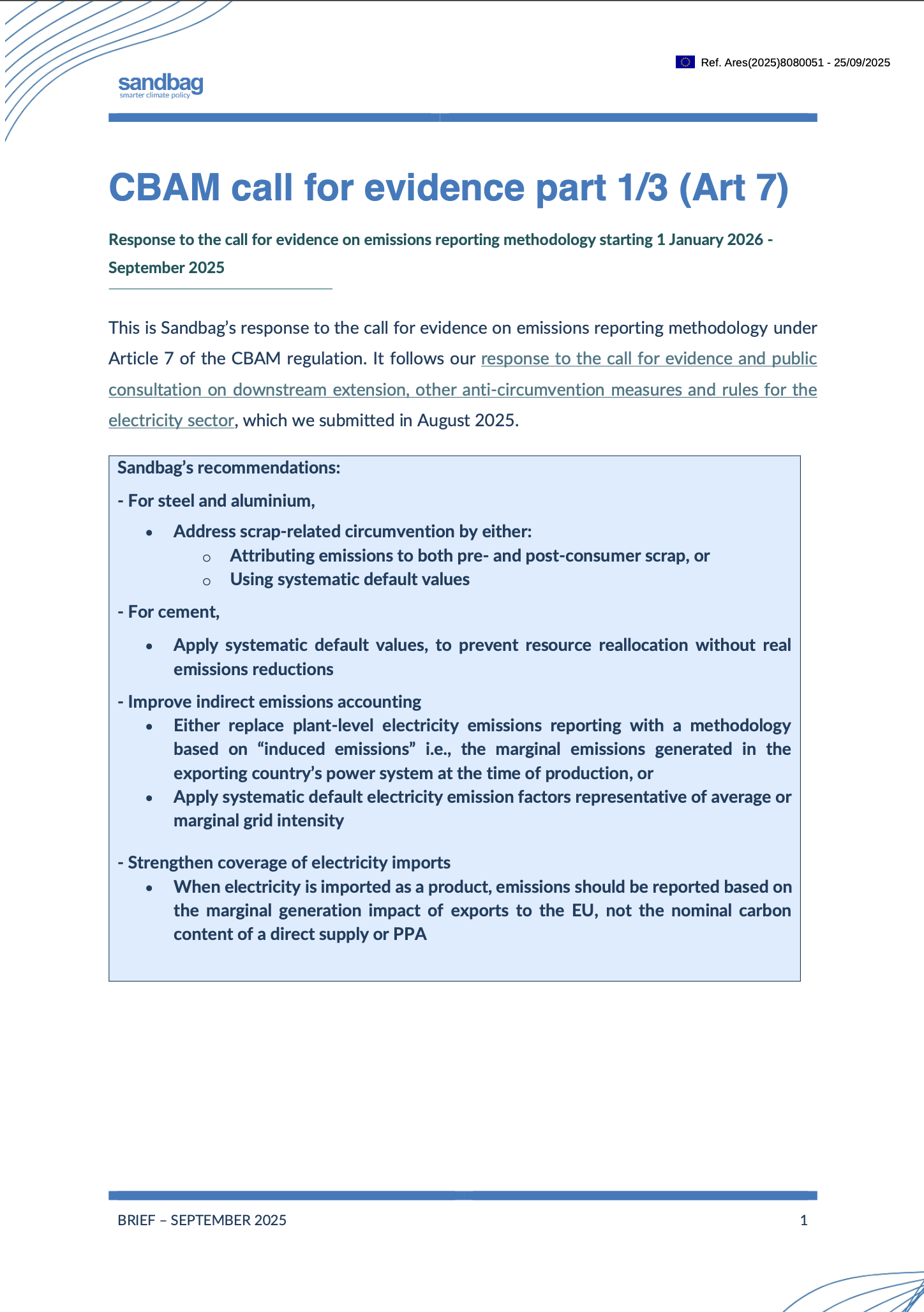
- Article 7 – Emissions reporting
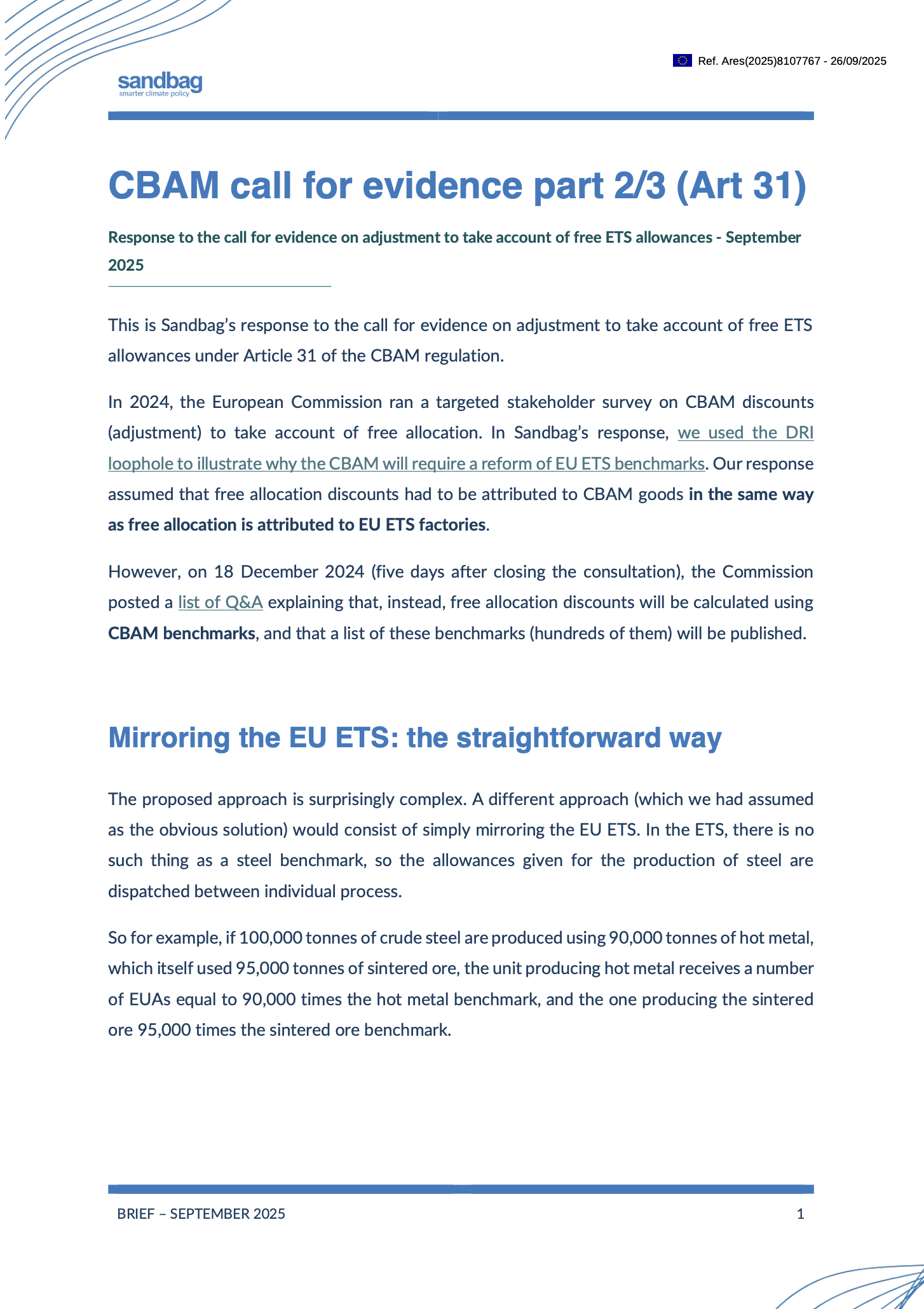
- Article 31 – Adjustment to take account of free allocation
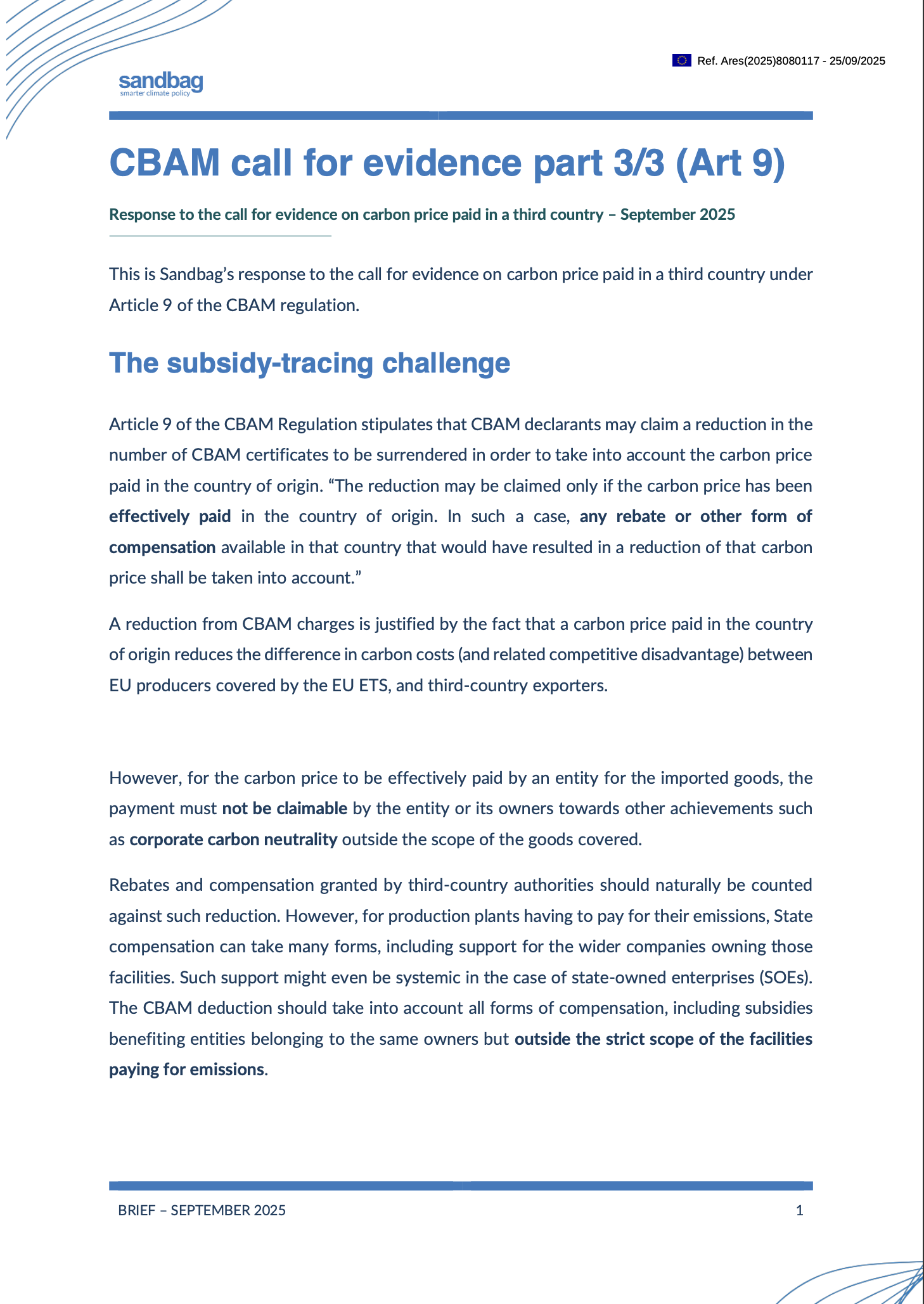
- Article 9 – Carbon prices paid in third countries
Sandbag responded to each consultation, highlighting risks that could weaken CBAM’s impact and offering practical solutions.
Our main recommendations
- Article 7 (Emissions reporting): Avoid resource shuffling by using induced emissions and systematic default values for steel, aluminium, cement, and electricity imports.
- Article 31 (adjustment for Free allocation): Move to product-based free allocation, ensuring equal treatment between EU and imported goods.
- Article 9 (Carbon price paid abroad): Ensure deductions only apply where carbon prices are paid for the production of goods, taking into account all support received by the production plant even not for carbon.
Related publications
Aug 6th 2025
Aug 1st 2025
Dec 13th 2024
More on the Carbon Border Adjustment Mechanism
The CBAM’s real impact on India
This report makes a granular assessment of India’s ability to remain competitive in the EU market under the CBAM.
Webinar: The CBAM’s real impact on India
Our webinar aims to present and discuss our upcoming report on the CBAM’s impact on India and introduce our updated CBAM simulator.
Whether the carbon price is right: response to the European Commission’s public consultation on carbon price paid in third countries
Sandbag’s response to the European Commission’s public consultation on the carbon price paid in third countries under the CBAM.

Carbon pricing trends in Asia
This report by Carbon Market Watch, with analysis by Sandbag, examines potential CBAM costs for Japan, South Korea, Vietnam, Indonesia, and the Philippines, based on their trade exposure, production outlooks, and progress toward implementing a domestic carbon price signal.
An opt-in solution to CBAM circumvention and complexity
Our position paper on the Commission’s legislative proposal amending the CBAM proposes an opt-in solution to CBAM circumvention and complexity.
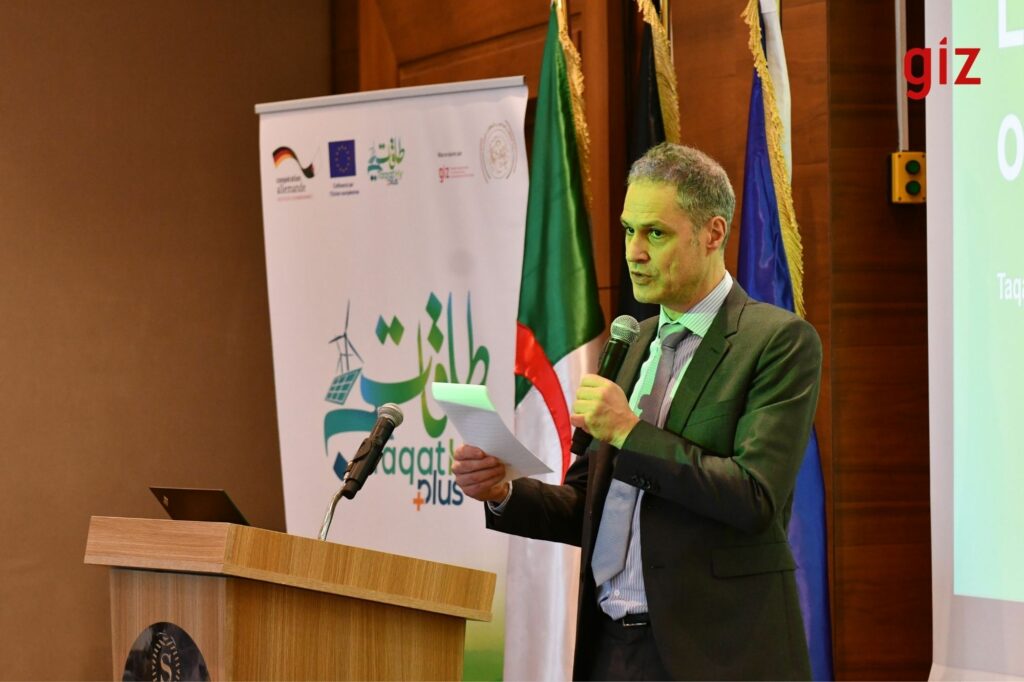
The EU CBAM gives a boost to Algeria’s iron exports
Sandbag’s brief assesses how the EU Carbon Border Adjustment Mechanism (CBAM) may affect Algeria’s iron and steel exports. It finds that although Algeria’s overall exposure to CBAM is limited, rising EU carbon costs are likely to increase EU market prices, with implications for the revenues and competitiveness of Algerian exports.
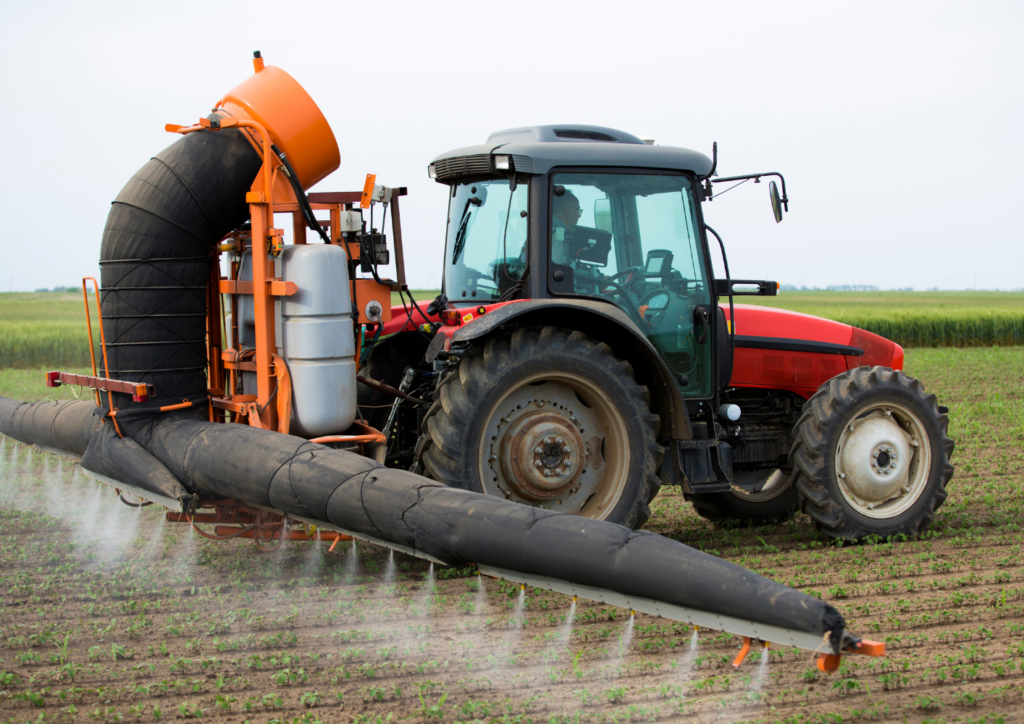
CBAM and Fertiliser Inflation in 2026: The facts behind the numbers
Estimates suggesting that the EU’s Carbon Border Adjustment Mechanism (CBAM) could increase fertiliser prices by up to 30% have brought a central question into focus: how significant is the inflationary impact likely to be?
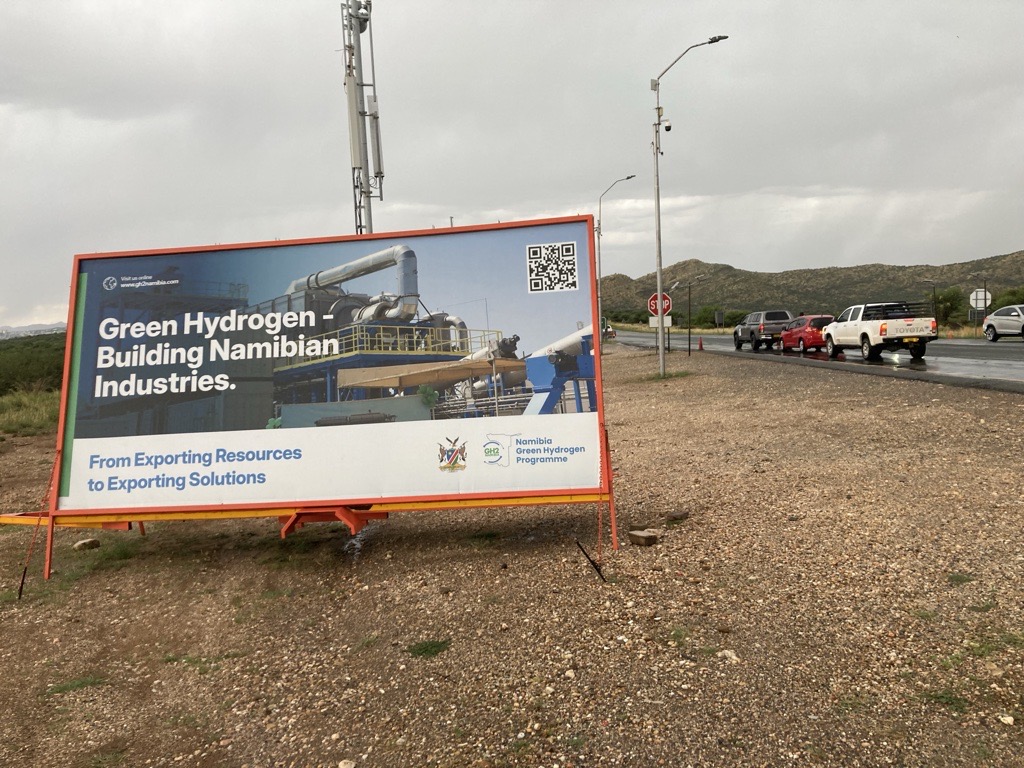
The CBAM dividend for Namibia and Ghana
This research note shows that Namibia and Ghana are likely to benefit from the CBAM, as EU price increases linked to the EU ETS outweigh CBAM fees under current exports. It also sets out transparent transformation scenarios, based on announced industrial projects, to show how expanded and lower-emissions production could further increase export revenues over time.
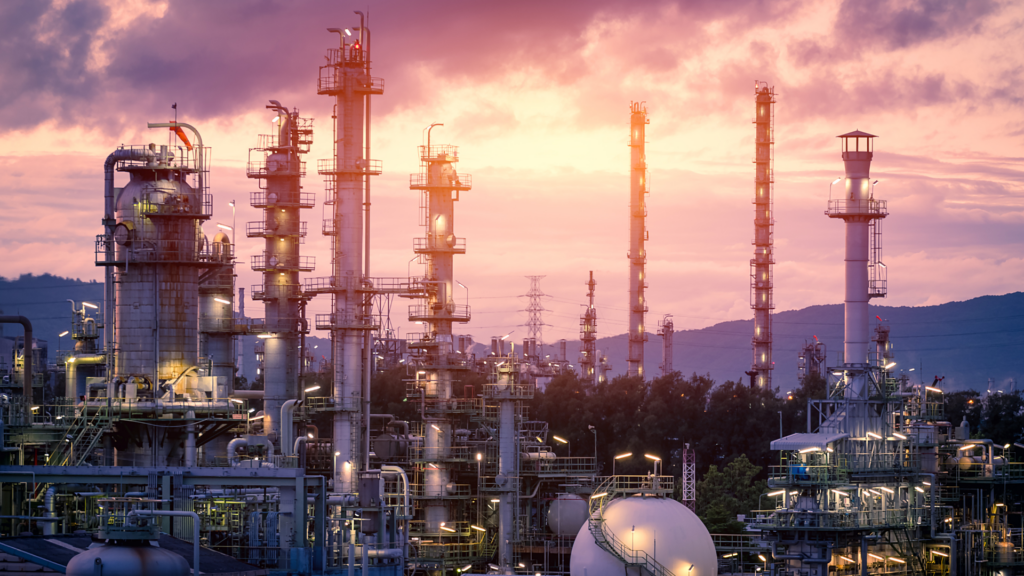
Chemicals in the CBAM: Time to step up
Sandbag’s latest brief explains why the EU CBAM must be expanded to cover key chemical value chains. With chemicals and refinery products responsible for 30% of industry emissions, phased inclusion is critical to prevent carbon leakage and phase out free allowances.
The EU CBAM: a two-way street between the EU and Africa
The Carbon Border Adjustment Mechanism CBAM is often misunderstood as a trade policy whereas it is actually a climate policy. Its only objective, as stated in Article 1 of the CBAM Regulation, is to replace the current system of free allocation of emission allowances to EU-based manufacturers under the EU carbon market.