
The EU has around 286 million motor vehicles, and every year, 6.5 million of these are scrapped. If the steel scrap from these end-of-life vehicles (ELVs) is not managed well, valuable resources are lost, harming the environment.
With the EU preparing its ELV Regulation, which could set targets for minimum recycled steel content for passenger cars : what should those targets be?
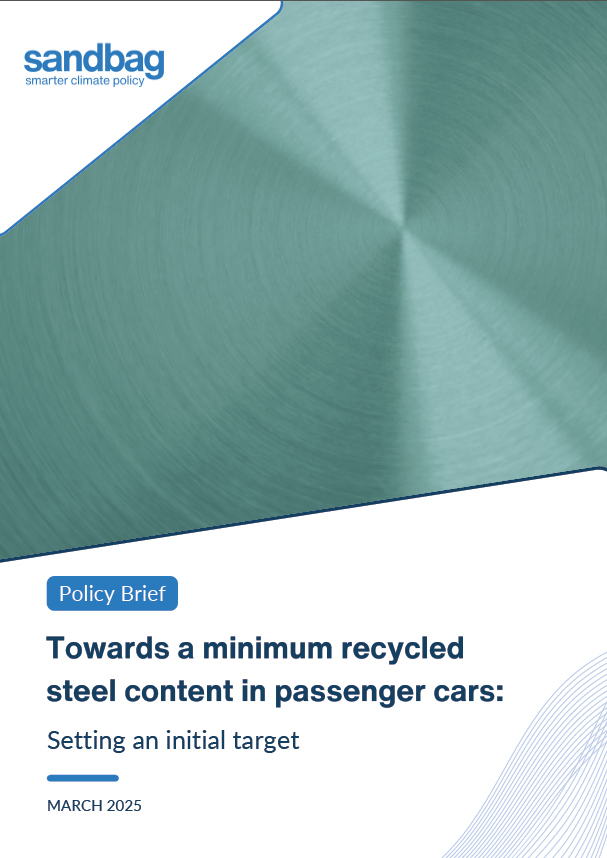
About the policy brief
Despite a 90% overall steel recycling rate from ELVs, only 6% is reused for new car production. This analysis considers the environmental and safety challenges inherent in modern automotive steel design to propose a minimum recycled steel content target for passenger cars. It proposes clear and differentiated targets that could improve recycling practices in car production.
Key findings
Recycling targets should be specific for product categories rather than a single target for the whole car.
Internal Combustion Engine (ICE) vehicles and Electric Vehicles (EVs) use different amounts of long steel, which is easier to produce with high amounts of post-consumer scrap. Hence, a single target may have unintended consequences, such as increased fuel consumption.
Lightweighting strategies are important to consider.
High-Strength Steels (HSS) and Advanced High-Strength Steels (AHSS) enable vehicle structures that minimise the use of materials while maximising their strength and utility but have stringent quality requirements.
Limiting copper contamination is key to ease recycling.
The brief proposes solutions, including removing motors and electronics (e.g. sensors and wiring) during the dismantling phase before shredding.
Proposed targets can increase recycling.
The brief proposes differentiated targets: 5-10% post-consumer scrap for flat AHSS, 10-15% for flat carbon steel, and 70% for long AHSS.
To maximise circularity in car manufacturing, the quality requirements of each steel category should be considered, which requires separate targets for recycled steel material in passenger cars.
Read the full policy brief to learn more.
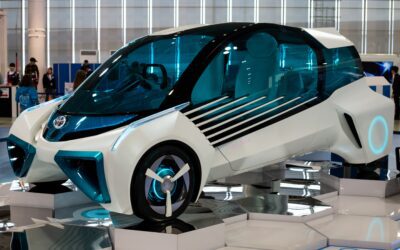
Photo by jplenio from pixabay
Related publications
Dec 1st 2025
May 26th 2025
More on the Steel
The Net Zero Industry Act: all industry, no net zero
The European Commission’s proposal for a Net-Zero Industry Act (NZIA) as part of the Green Deal...

The European Hydrogen Bank: a recipe for competitive distortion
Last Thursday, the European Commission published its Communication on the European Hydrogen Bank...

EU Criteria for Green Hydrogen: How They Could Increase Relience on Thermal Power and Hijack the Energy Transition
On February 13th 2023, the European Commission released two pieces of legislation to provide criteria defining renewable hydrogen products. The so-called Delegated Acts matter because they set out how to comply with other regulations under review which will force ships, aircraft and heavy industry to use a minimum content requirement of the fuel, such as the Renewable Energy Directive, REFuelEU Aviation and FuelEU Maritime.

Mundo Matogné. Rue d’Edimbourg 26, Ixelles 1050 Belgium. Sandbag is a not-for-profit (ASBL) organisation registered in Belgium under the number 0707.935.890. EU transparancy register no. 277895137794-73. VAT: BE277895137794-73