


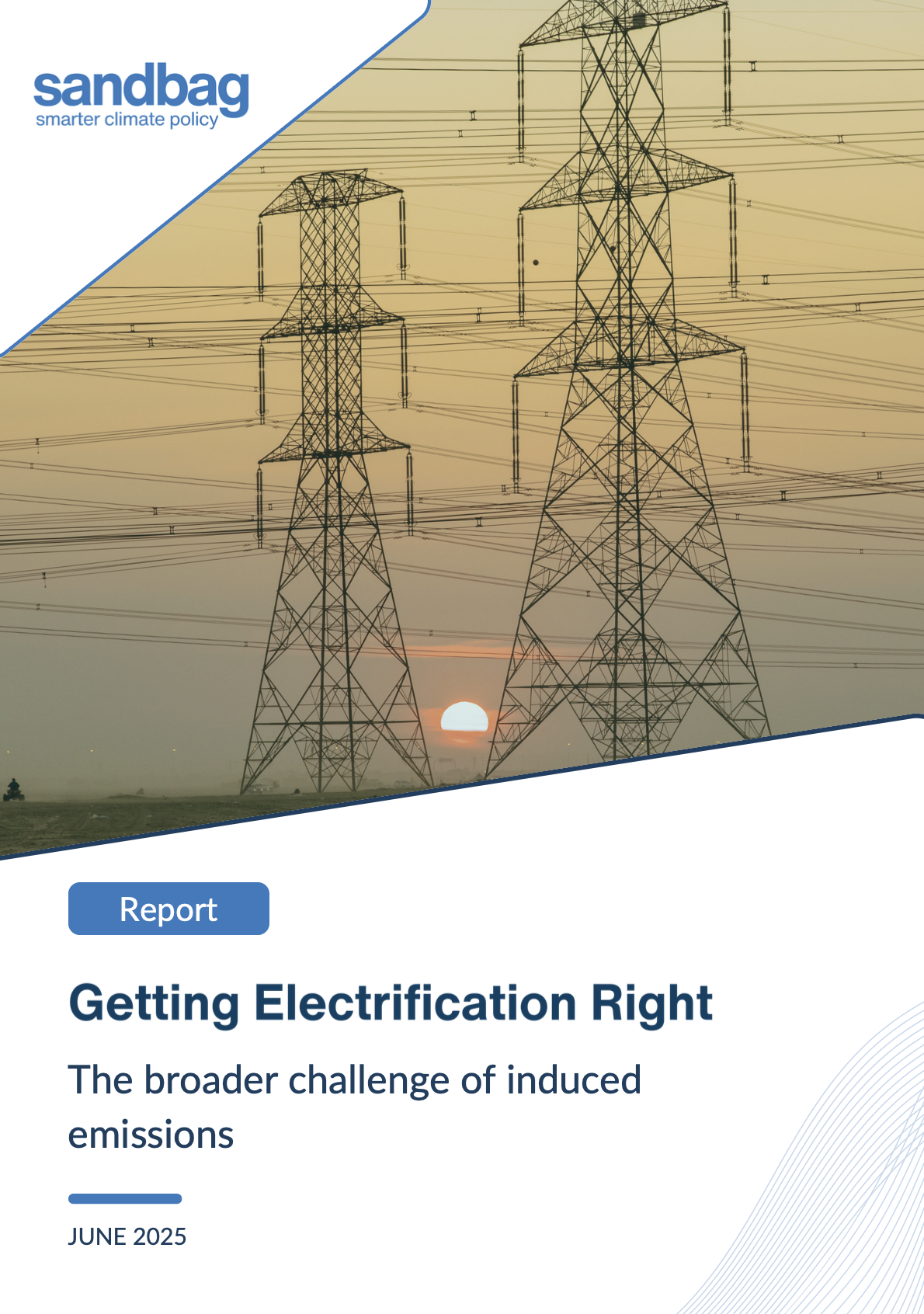
As Europe accelerates renewable energy deployment to meet RED III targets, Sandbag’s latest report explores the often-overlooked issue of “induced emissions” — the emissions triggered by when and where electricity is used.
It shows that decarbonisation efforts can be undermined if new electricity demand occurs at times of fossil-based generation, even when the electricity is technically renewable.
About the report
This report examines how the climate impact of electricity use is shaped not just by its source, but also by its timing and location. It evaluates the EU’s RED III framework and associated hydrogen targets, using the RFNBO standard as a case study. The analysis shows that ill-timed use of renewable electricity — particularly for hydrogen production — can inadvertently drive fossil generation. It argues for more strategic use of electricity to avoid these unintended consequences and support genuine decarbonisation.
This report was updated on 18 August 2025.
Key findings
Induced emissions are a critical blind spot
Additional electricity demand from hydrogen production during periods of fossil generation can displace renewables and increase total emissions — even when the electricity is certified as “green”.
Hydrogen production timing matters
RFNBO-compliant hydrogen production can result in high emissions if it draws on renewable electricity at times of general grid scarcity.
Emission intensity varies by scenario and country
Induced emissions range from 0.3 to over 30 tCO₂ per tonne of hydrogen depending on assumptions, grid mix, and national context.
Direct electrification is more energy-efficient
Electrification of transport and industry typically results in lower emissions per unit of energy delivered compared to hydrogen.
RED III implementation needs reform
To meet climate goals effectively, RED III targets must be pursued with stricter criteria for additionality, timing, and grid impact of new electricity demand.
The report highlights the importance of aligning electrification policy with grid conditions to ensure RED III targets drive genuine decarbonisation.
Read the full report to learn more.
Photo by Tayssir Kadamany from Pexels
In the news
-
Carbon Pulse, 12 June 2025: EU plans for green hydrogen could backfire and cause emissions
-
Euractiv, 12 June 2025: EU green hydrogen rules will drive up emissions, new report suggests
Related publications
August 11th 2025
More on the Industry
Sandbag responds to Thyssenkrupp
Our technical brief on how the ETS is a net benefit for European steelmakers was covered by ESG.Table, alongside a response from Thyssenkrupp Steel, which raised three objections. This response analyses the German steelmaker’s claims.
EU steelmaking: the ETS money is coming!
This brief challenges recent industry claims that EU steelmakers are being harmed by the EU’s Emissions Trading System and finds that the opposite is true.
Chemicals and CCS/U: Exploring the role of carbon capture in the sector’s transition to ‘circularity’
This technical brief explores the potential role of carbon capture, storage and utilisation (CCS/U) for Europe’s chemicals sector.
We find that CCS/U will be necessary in Europe’s chemicals sector, but only to a limited extent in targeted applications.
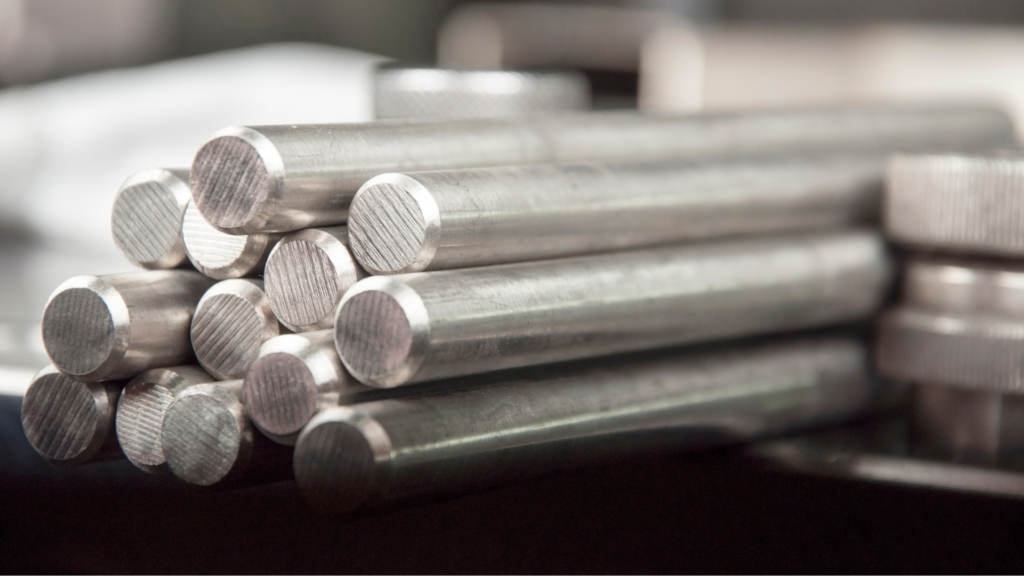
Steel labelling: Beyond the sliding scale
As EU policymakers debate how to certify low-carbon steel, Sandbag’s new briefing analyses the “sliding scale” method — and outlines why it may hinder rather than help decarbonisation. A new model is proposed based on product-specific benchmarks, multi-tier ratings, and circularity incentives.
Scrap Steel at Sea: How ship recycling can help decarbonise European steel production
As Europe seeks to decarbonise its steel industry, a new Sandbag report highlights an overlooked solution: high-quality scrap steel from retired ships. With up to 15 million tonnes of certified scrap available annually, ship recycling could meet 20% of EU steel scrap demand — if policy gaps are addressed.
Sandbag’s feedback to the call for evidence on the Circular Economy Act
Sandbag welcomes the Circular Economy Act (CEA) as an important step to accelerate the transition to a circular economy in the EU. Progress in this area has been slow and this act is sorely needed to address systemic issues holding back circularity, including the current fragmented approaches across Member States.
Electrification or electrical decarbonisation? We need both!
We agree with the European Commission’s general diagnosis that increasing the share of electricity in overall energy consumption is necessary to achieve deep decarbonisation. However, it is not sufficient. If overall energy use increases, or if electricity generation does not decarbonise rapidly, then electrification may fail its decarbonisation role.
Heat up industry, not the climate!
The European Commission has set out proposed terms and conditions for its auction on electrified /renewable industrial heat under the Innovation Fund (IF). We support the IF’s acknowledgment that indirect emissions are linked to the timing of electricity consumption rather than the source of electricity used. However, although it claims an intention to limit electricity use at hours of high marginal emission intensity, we are concerned that the proposed terms might lead to the opposite and significantly limit the scheme’s climate benefits.
Extending the CBAM to indirect emissions
The European Commission is considering amending the Carbon Border Adjustment Mechanism (CBAM) to include indirect emissions of CO2 from the use of electricity in the manufacturing of CBAM-covered goods.
New Principles for Steel Labelling: response to the consultation on the Industrial Decarbonisation Accelerator Act
Sandbag’s response to the EU’s Industrial Decarbonisation Accelerator Act sets out four principles to guide green steel labelling schemes, promoting credible standards based on lifecycle emissions and system-wide decarbonisation.