
The EU’s Carbon Border Adjustment Mechanism (CBAM) aims to ensure that imported goods face the same carbon costs as those produced in Europe.
As CBAM enters its next phase, the European Commission asked for input on three areas:
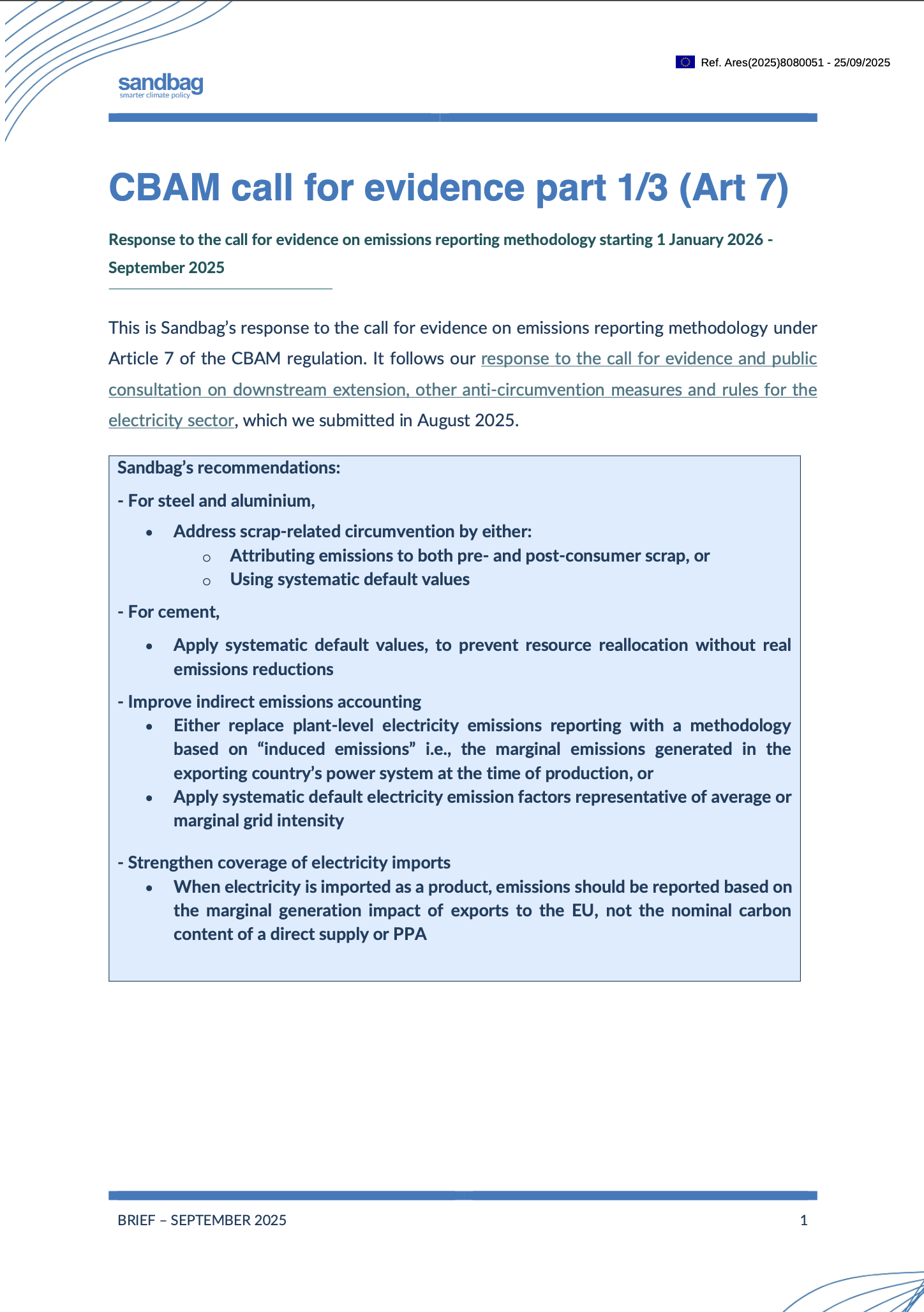
- Article 7 – Emissions reporting
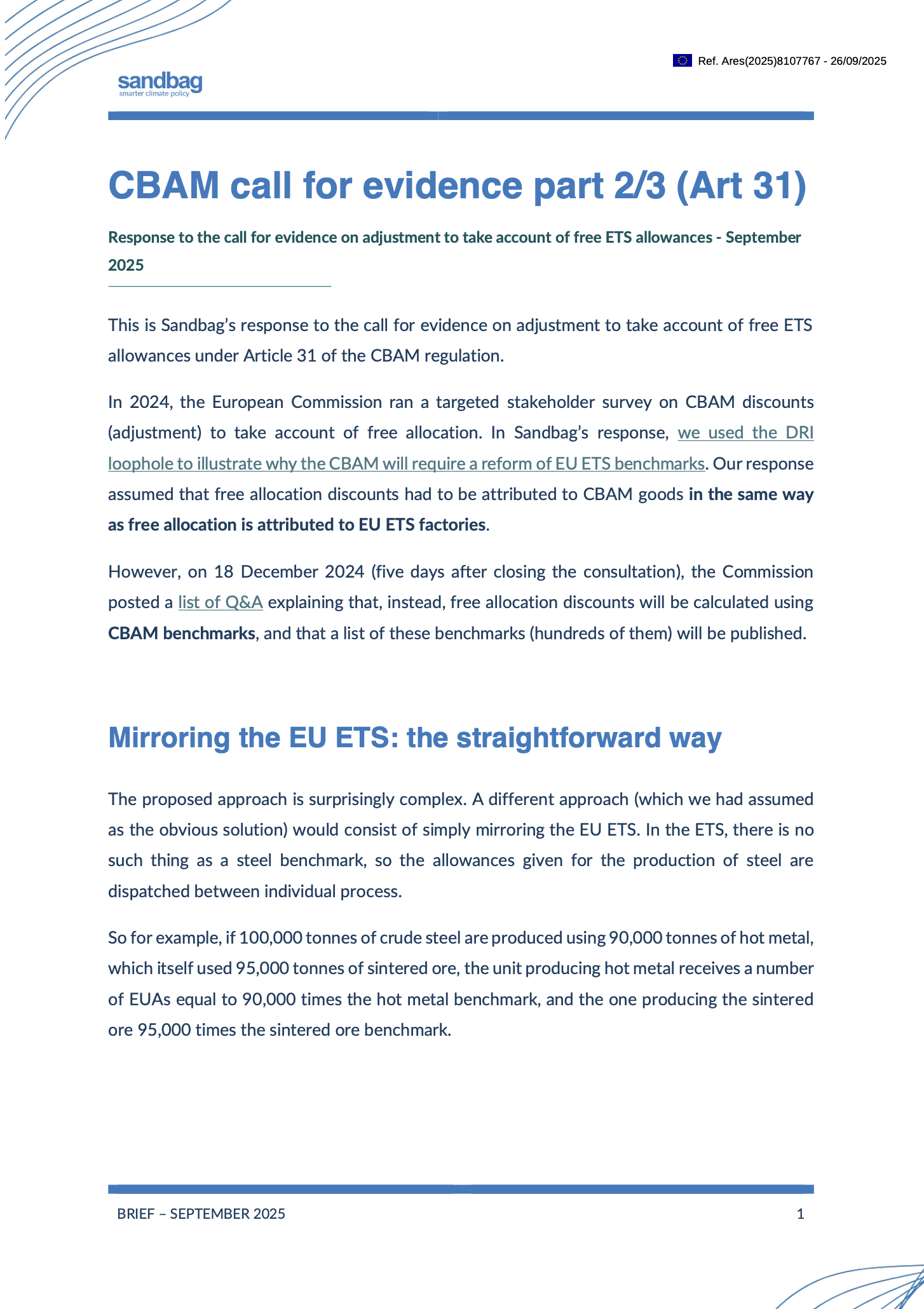
- Article 31 – Adjustment to take account of free allocation
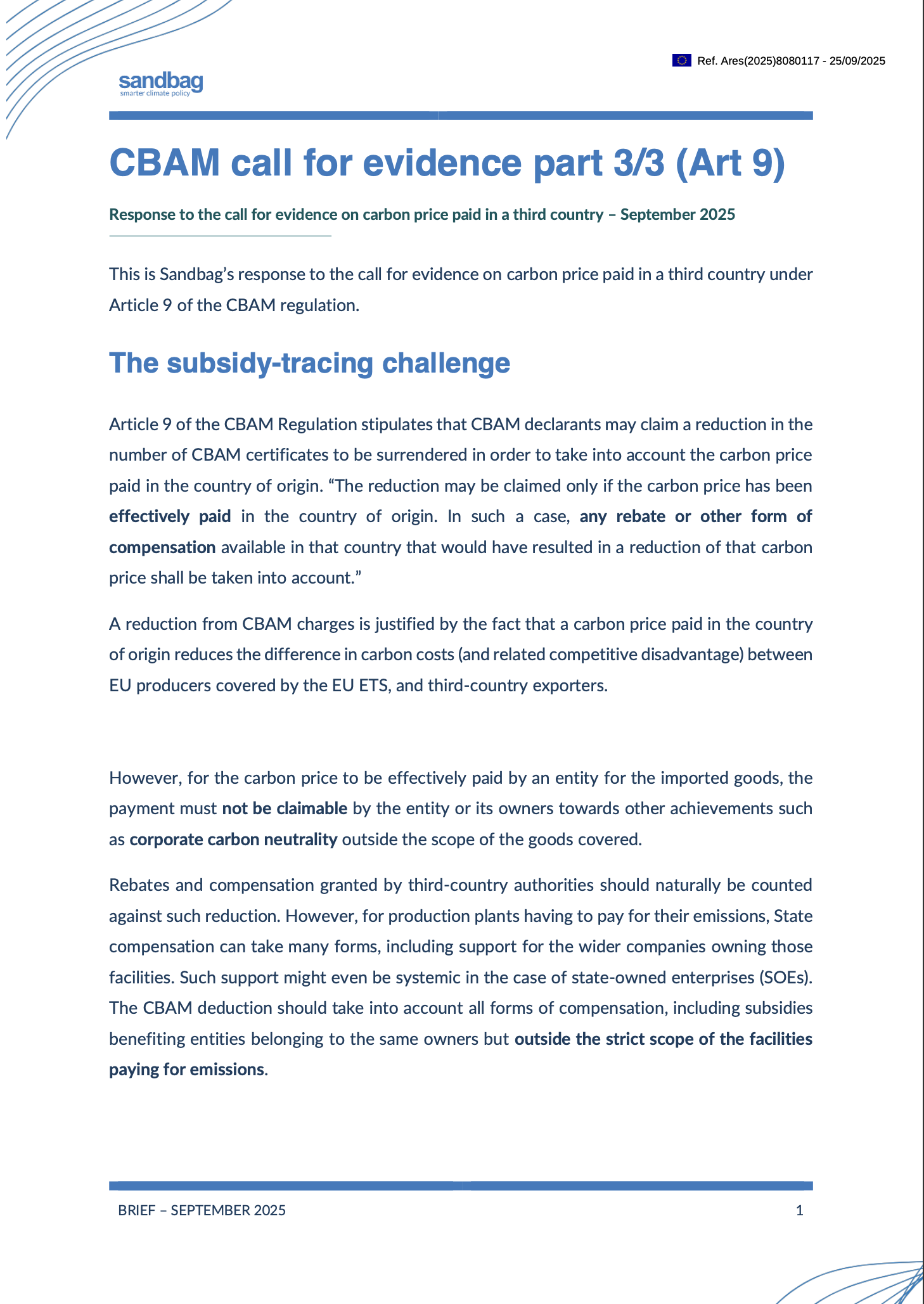
- Article 9 – Carbon prices paid in third countries
Sandbag responded to each consultation, highlighting risks that could weaken CBAM’s impact and offering practical solutions.
Our main recommendations
- Article 7 (Emissions reporting): Avoid resource shuffling by using induced emissions and systematic default values for steel, aluminium, cement, and electricity imports.
- Article 31 (adjustment for Free allocation): Move to product-based free allocation, ensuring equal treatment between EU and imported goods.
- Article 9 (Carbon price paid abroad): Ensure deductions only apply where carbon prices are paid for the production of goods, taking into account all support received by the production plant even not for carbon.
Related publications
Aug 6th 2025
Aug 1st 2025
Dec 13th 2024
More on the Carbon Border Adjustment Mechanism
Strengthening the CBAM — by default
The consultation aims to address concerns that the CBAM has loopholes that could distort competition between products manufactured in the EU (covered by the EU ETS) and imported goods. Our response sets out proposals for how the design of the CBAM could be improved in these regards.
Extending the CBAM to indirect emissions
The European Commission is considering amending the Carbon Border Adjustment Mechanism (CBAM) to include indirect emissions of CO2 from the use of electricity in the manufacturing of CBAM-covered goods.
CBAM extension: Closing the emissions gap
Free allocation has long been used to address carbon leakage under the EU ETS, but it has key limitations. It only covers emissions up to benchmark levels, fails to reward cleaner EU producers, and forfeits auction revenues that could support decarbonisation. It also creates perverse incentives by making high-emission goods artificially cheap.