
The signatories warn that shifting from domestic action to external offsets risks weakening EU climate ambition, undermining international credibility, and delaying essential structural change. The letter calls for a fully domestic, science-aligned target of at least 90% net emissions reductions by 2040.
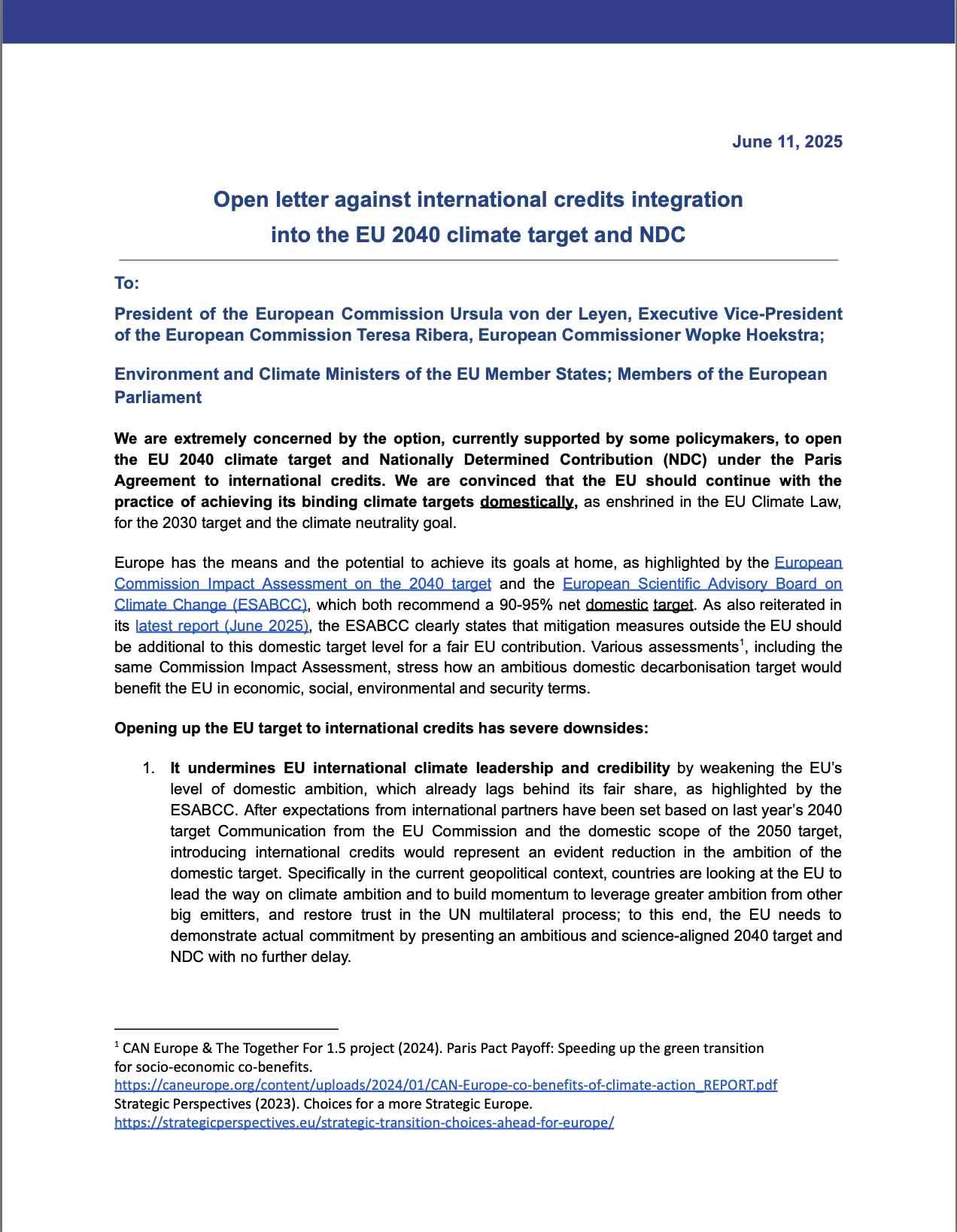
About the open letter
The letter responds to growing political signals that international credits could be introduced into the EU’s 2040 climate framework. This would mark a major departure from the current EU Climate Law, which mandates that targets be met primarily through domestic action.
Key Findings
- Undermines EU climate credibility The inclusion of international credits would weaken the ambition of the EU’s domestic climate targets, risking the erosion of its hard-won leadership on climate action.
- Environmental and human rights risks Article 6 credits have been linked to weak safeguards and real-world abuses. Early deals under this framework show troubling signs of poor quality and unverifiable emissions savings.
- Fails to deliver real emission reductions Offsets only shift emissions elsewhere and delay structural decarbonisation at home. A systemic review found that just 16% of credits reflected actual emissions cuts.
- Not a form of climate finance Buying credits does not constitute a climate finance contribution. It is a financial transaction — not a substitute for real EU action.
- Increases long-term costs and uncertainty Relying on credits would mean recurrent costs and financial outflows, locking in polluting investments and stranding future assets.
Related publications
More on the 2040 climate target
Letter to members of the European Parliament Environment (ENVI) committee
The negotiations on key climate files of the Fit For 55 package which was launched by the European...

Reform, not a patch, will curb carbon price volatility
As energy prices hit record levels, the European Union’s carbon emissions permits – which hit €100...

Risk of surplus with Market Stability Reserve – a short story
The EU is in the process of reforming its carbon market (EU ETS) in line with raising the bloc’s emission reduction target up to 55%, from 40% currently. Amongst the many features…