MEPs vote on reforms to tackle cement sector’s windfall profits from the ETS MEPs in the European Parliament Environment Committee (ENVI), voting on amendments to the EU Emissions Trading System (ETS), have proposed to stop giving free allowances to several industrial...
Category: Industry
CCU-fuels are not renewable
30th NOVEMBER UPDATE The Commission published its proposals for the Renewable Energy Directive today as part of the EU's Winter Package. You can read them here. Disappointingly, a loophole that allows non-renewable CCU-fuels to contribute to the EU renewables target...
Paris means negative emissions
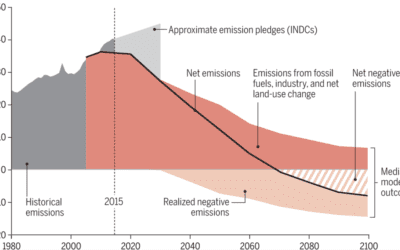
Brexit may mean Brexit, but Paris means negative emissions. Today, as the global agreement enters into force, governments and civil society must act in concert to deploy carbon negative technology. If governments worldwide are serious in their Paris Agreement plans...
Cement Exposed: New data shows no fall in CO2 emissions
Increasing CO2 intensity: Data from the Cement Sustainability Initiative shows that the carbon intensity of EU cement increased from 2008 to 2014. No carbon leakage: Since 2011, the EU cement sector has vastly increased exports of cement clinker outside the EU,...
Cut the flab: Cement sector’s free lunch is costing other companies
Sandbag’s recent report on the cement sector highlighted several key flaws in Emissions Trading Scheme (ETS) rules around free allocation of allowances. These rules give rise to perverse incentives to pollute: we estimate the ETS has increased cement sector emissions,...
Cement – The Final Carbon Fatcat
Sandbag’s new report reveals European climate laws are increasing emissions in the cement sector, whilst multinational cement companies reap huge financial windfalls. The cement sector must be the final Carbon Fatcat; real reform to the Emissions Trading Scheme (ETS)...
Carbon costs for the Steel Sector are not as high as feared
A recent report by the consultancy Ecofys for the European steel association Eurofer suggests steel companies face costs of €28/tonne of steel to comply with ETS obligations by 2030. However, at Sandbag we are sceptical that the proposed revision to the Emissions...
Putting CO2 into the circular economy
Last week, Sandbag submitted its response to the Commission’s Consultation on the Circular Economy, drawing attention to the understated potential of Carbon Capture and Storage (CCS) and mineralisation technologies to close the carbon loop and recycle wastes into...
Deep cuts in industrial emissions are needed: How do we pay for them?
Deep emissions reductions in the European power sector are already occurring, but emissions reductions in industrial sectors have been largely limited to incremental efficiency gains. In a new briefing, Sandbag looks at a funding model for industrial decarbonisation...
Restarting Europe’s drive for Carbon Capture and Storage (CCS)
Carbon Capture and Storage (CCS), a variety of processes for extracting CO2 from large point sources and permanently storing it, has been recognised by the European Commission since the 2008 Impact Assessment as an essential part of Europe’s low carbon pathway....