|
Welcome to Sandbag’s January newsletter!
|
Sandbag continues to deepen its work on the CBAM, the EU ETS, and industrial decarbonisation. In this edition, we share insights from our CBAM presentations in Africa, introduce new analysis on chemicals in the CBAM, highlight fresh publications on clean steel and circularity, and outline our ongoing advocacy to strengthen the ETS framework.
|
|
|
|
|
Our latest updates
|
CBAM
Hold firm on fertilisers!
In recent weeks, Sandbag has actively contributed analysis to the public and policy debate on proposals to exempt fertilisers from the CBAM under pressure from the French government who worried about the country's farmers. We warned French Prime Minister Sebastien Lecornu that France should not undermine the policy it helped in creating for so many years and invited him to propose instead the inclusion of food products into the CBAM.
|
|
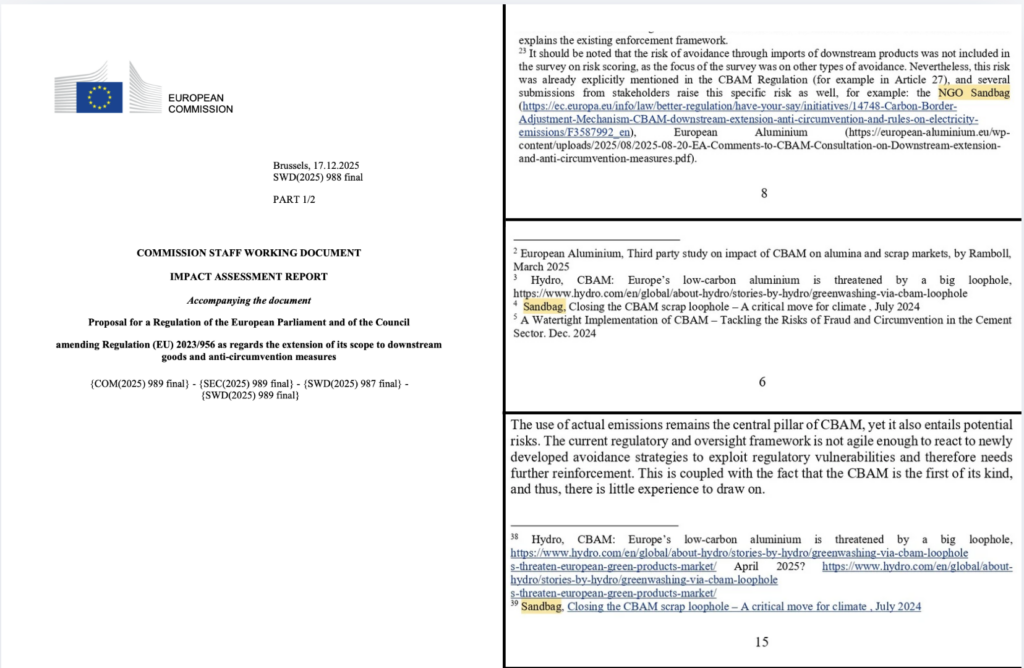
Sandbag analysis cited in the European Commission’s CBAM impact assessment
Sandbag’s CBAM analysis was cited multiple times in the European Commission’s CBAM impact assessment report published on 17 December 2025, including repeated references to our work on scrap-related circumvention.
|
|
These policy options were set out in Sandbag’s response to the Commission’s public consultation on CBAM reform.
|
|
|
Sandbag engages with African stakeholders on CBAM impacts
|
In November and December 2025, Sandbag presented the CBAM and its likely impacts on African countries, as part of a series of CBAM dialogues organised by Konrad-Adenauer-Stiftung (KAS) and its country offices. The analysis combined modelling based on historical trade data using Sandbag’s CBAM Simulator with forward-looking scenarios reflecting industrial investments planned in these countries.
|
|
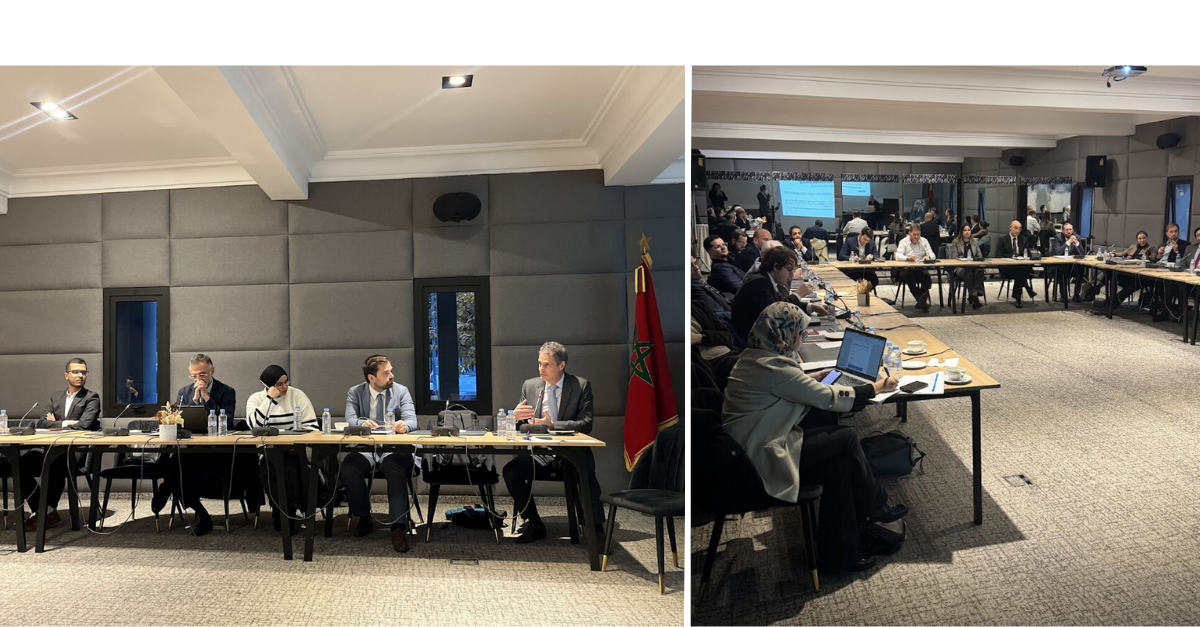
10 December – Morocco
In Morocco, we shared a panel with local government and industry representatives including Nahla Benslama (Moroccan Agency for Investment and Export Development), Khalid Benhamou, director of Sahara Wind and a pioneer of large-scale renewable energy development in Morocco, and Mohamed Raboudi (director of carbon farming start-up Alder Earth, Tunisia), bringing perspectives from both industry and sustainable finance.
|
|
Our presentation was introduced by Gerald Audaz (EU Delegation to Morocco). Sandbag’s modelling showed that current CBAM impacts are net positive for Moroccan exports, especially for fertilisers, and that planned investments in green ammonia could further increase net revenues.
|
|
|
|
|
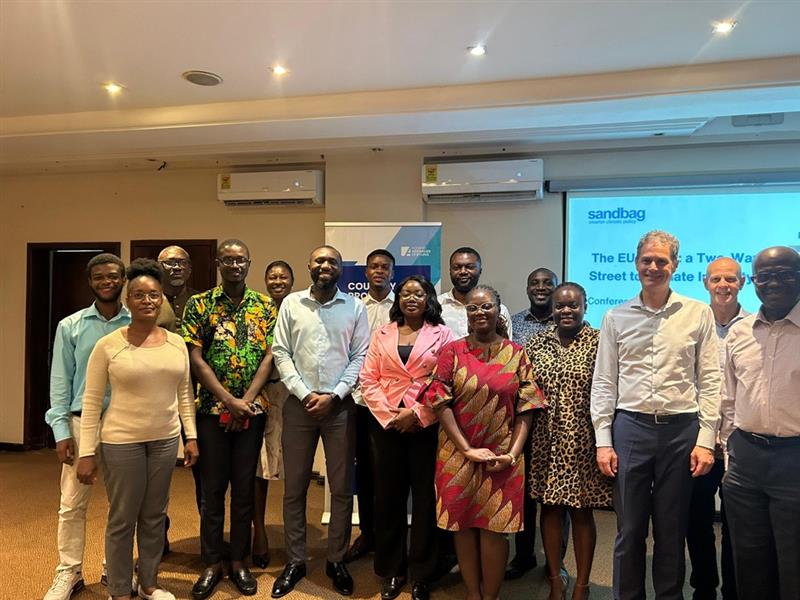
1 December – Ghana
In Ghana, Sandbag highlighted the CBAM’s positive impact on the country’s aluminium sector. The event was attended by representatives from government, academics, and local companies such as Solar Taxis, Aluworks and Omnifert.
|
|
|
|
|
27 November – Namibia
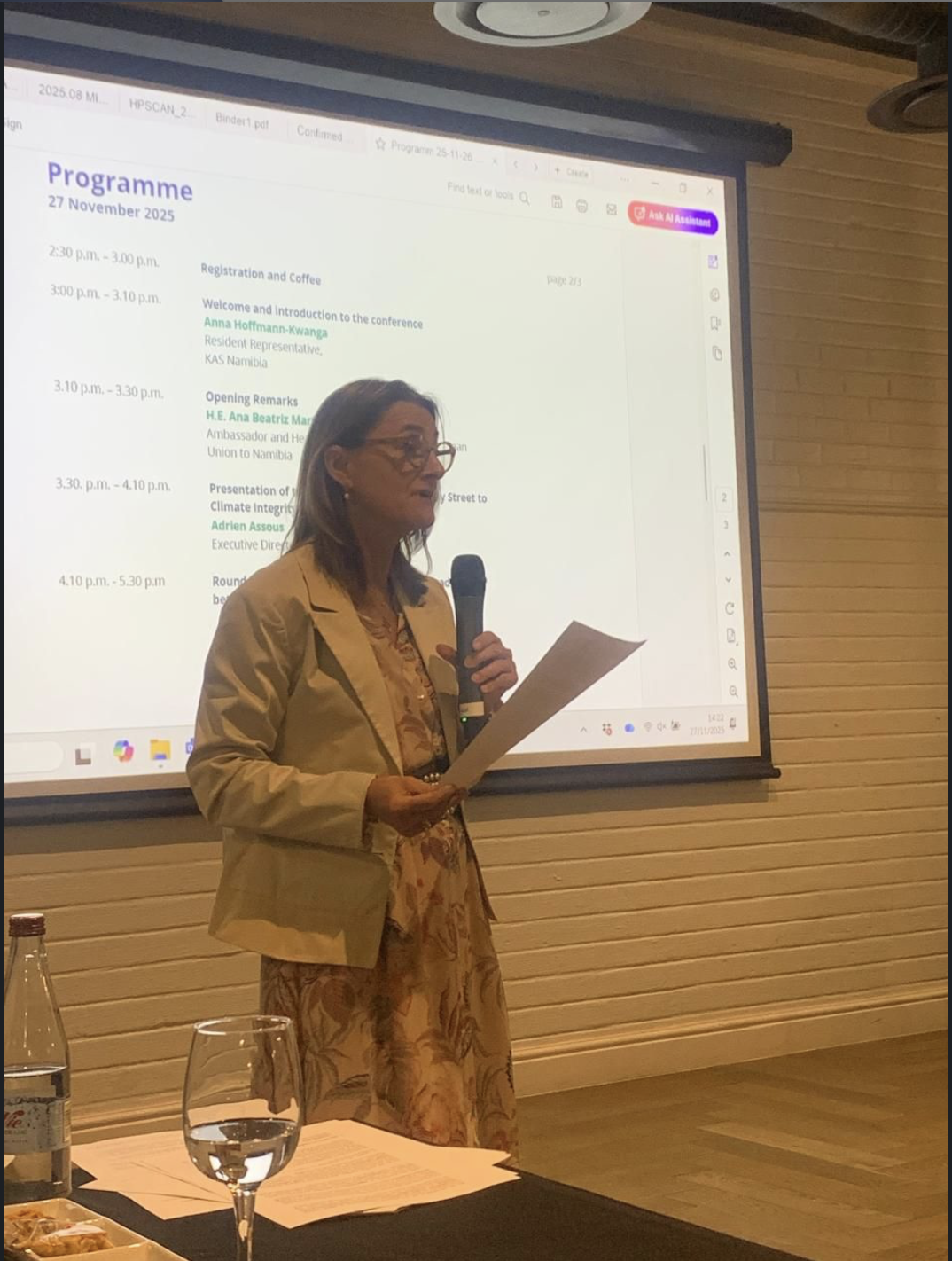
In Namibia, Sandbag presented its findings to an audience of policy makers, industry and development stakeholders. It was introduced with a keynote speech from Her Excellency Ana Beatriz Martins, EU Ambassador to Namibia. Our presentation showcased Namibia’s very limited current CBAM exposure and the policy’s positive impact on revenues expected from flagship green hydrogen and green iron projects in the country.
|
|
|
|
|
Chemicals in the CBAM: Time to step up
(25 November 2025)
Sandbag’s new brief sets out why CBAM coverage must expand to include chemical products in parallel with phasing out free allocation in the EU ETS. The analysis shows that expanding CBAM to key chemical value chains — including upstream refinery products and downstream polymers— is technically feasible and essential to prevent carbon leakage.
|
|
|
|
EU ETS
|
ICC reform and expansion risks diverting ETS revenues from real climate action( 13 November 2025)
Sandbag joined 14 NGOs in urging the European Commission to reform the Indirect Cost Compensation (ICC) scheme before expanding it. The joint letter stresses that ETS revenues must support real decarbonisation, not fossil-based subsidies, and warns that the proposed changes could divert funds away from climate action.
|
|
|
|
Steel and Circular Economy
|
Steel labelling: Beyond the sliding scale
(1 December 2025)
Sandbag’s new brief warns that the “sliding scale” used in proposed steel labelling can distort incentives, hide real emissions, and penalise products that are inherently more difficult to decarbonise. This risks weakening both transparency and circularity in the steel sector. We recommend replacing the sliding scale with a product-specific certification system that reflects actual production routes, rewards genuine emissions reductions, and better supports circular economy goals.
|
Scrap steel at sea: How ship recycling can help decarbonise European steel production
(20 November 2025)
Sandbag’s joint report with the NGO Shipbreaking Platform and the University of Tuscia explores how safe, regulated ship recycling can unlock a new stream of high-quality scrap steel for Europe’s Electric Arc Furnace transition. With rising demand for secondary steel under EU climate targets, the study shows that end-of-life vessels could provide millions of tonnes of premium scrap annually, reducing emissions, lowering dependence on imports, and strengthening Europe’s circular economy.
|
Sandbag’s feedback on the Circular Economy Act
(12 November 2025)
Sandbag’s submission to the Commission highlights how stronger circularity measures can support the decarbonisation of Europe’s steel sector. We call for higher-quality scrap, clearer traceability, and harmonised EU rules for scrap classification, alongside maintaining a strong carbon price signal. Aligning ETS and CBAM incentives will be essential to reward genuinely circular steelmaking and ensure high-value secondary steel remains in the EU.
|
|
You can read all of our publications on our website here.
|
|
|
|
|
Stay tuned for policy updates up in 2026!
|
|
|
2026 is a critical year for the CBAM. Even as it entered its definitive phase on 1st January, critical details of the policy still need to be finalised.
|
Trilogue discussions are expected in Q1 on the scheme’s downstream extension and other circumvention measures, and the Temporary Decarbonisation Fund supposed to compensate exporting industries for their carbon costs. The proposed Article 27a and its proposed early triggering to take fertilisers out of the CBAM will be debated.
|
An implementing act is also due about the carbon price paid in the country of origin of EU imports, with a question mark on the eligibility of Article 6 credits in discounting CBAM fees.
|
|
Industrial Accelerator Act
|
|
The Industrial Decarbonisation Accelerator Act (IDAA) is now expected to be presented in February 2026, following several delays from its originally anticipated timeline. The initiative is intended to support the decarbonisation of energy-intensive industries by accelerating clean investment and strengthening demand for low-carbon industrial products, notably through faster permitting processes and new demand-side measures such as product labelling and public procurement criteria.
|
|
|
|
|
|
We want to hear from you!
|
|
Do you have feedback on our newsletter? Let us know!
|
|
|
|
Stay informed on Europe’s decarbonisation journey — follow Sandbag for the latest analysis, insights, and policy updates.
|
|
|
 
|
|
|
|