|
|
|
Our insights on the EU ETS and CBAM
|
In this edition, we share insights from our advocacy for an effective EU ETS and CBAM, a few reasons to remain hopeful, and our recent webinars and publications.
|
|
Latest updates
|
Our newest publication
We just launched our new report, ‘A guide to the EU CBAM – Perspectives for Chinese Stakeholders.'
|
The report looks at how Chinese firms can navigate the EU’s CBAM, including what challenges businesses can overcome, e.g. regarding verification and verification risks. Based on our CBAM Simulator 2.0, we found that China could draw net financial benefits from the CBAM in a scenario where the most innovative or lowest carbon products are dedicated to EU exports. Annual CBAM fees of 303m euros could then be more than compensated by extra revenues, leading to a profit of 147m euros.
|
|
Sandbag at COP31
COP31 will take place from 9 to 20 November 2026 in Antalya, Türkiye. Following our new report on China and the CBAM, on November 13 at 15:45, we will participate in a panel at the China Pavilion, organised by The Sunrise Project and Earth & Life Symbio (E&L) and focused on green supply chain resilience and global collaboration in the Auto Industry.
|
|
On 19 November at 9:00, we will be joining a panel on petrochemical industry decarbonization hosted by South Korean organization SFOC, sharing Sandbag’s views on CBAM extension to chemicals products.
|
|
|
|
EU ETS: the fight is on!
The trilogue on the Market Stability Reserve (MSR) concluded on 20 October by avoiding the worst possible outcome: the Parliament and Council agreed to overturn the Commission’s initial proposal to scrap the MSR’s invalidation mechanism, which could have let surplus allowances in the EU’s carbon market accumulate in the system without limitation.
|
Sandbag had responded to the Commission’s proposal with a brief raising alarm, ‘EU ETS reform: let’s not invalidate climate policy!’, which we presented to shadow rapporteurs of the Parliament’s ENVI committee alongside impact assessments of the other measures set forth by the Commission and ENVI rapporteur Peter Liese on the market’s supply and demand balance.
|
|
Ahead of the 6 October deadline for filing amendments, we shared with key MEPs a list of amendments that we think matter. One of them addressing the key issue of aviation’s uncontrolled emission rise, was picked up by The Left and is now officially part of the legislative debate.
|
|
|
|
Asking MEP Peter Liese to consider Sandbag’s proposal on aviation
Sandbag's Adrien Assous contributed to a stakeholder dialogue hosted by MEP Peter Liese. Adrien highlighted that the EU ETS is not designed to reduce emissions from air transport. Adrien mentioned Sandbag's EU ETS proposal, which would limit the share of general allowances airlines can surrender, which would effectively make flying more expensive and raise more funds for rail infrastructure. Adrien further noted that "Rail transport contributes €250 billion to the EU’s GDP. This is money spent at home, unlike aviation’s turnover which is up to 50% spent of fuel imports.”
|
|
Read the full speech here.
|
|
|
|
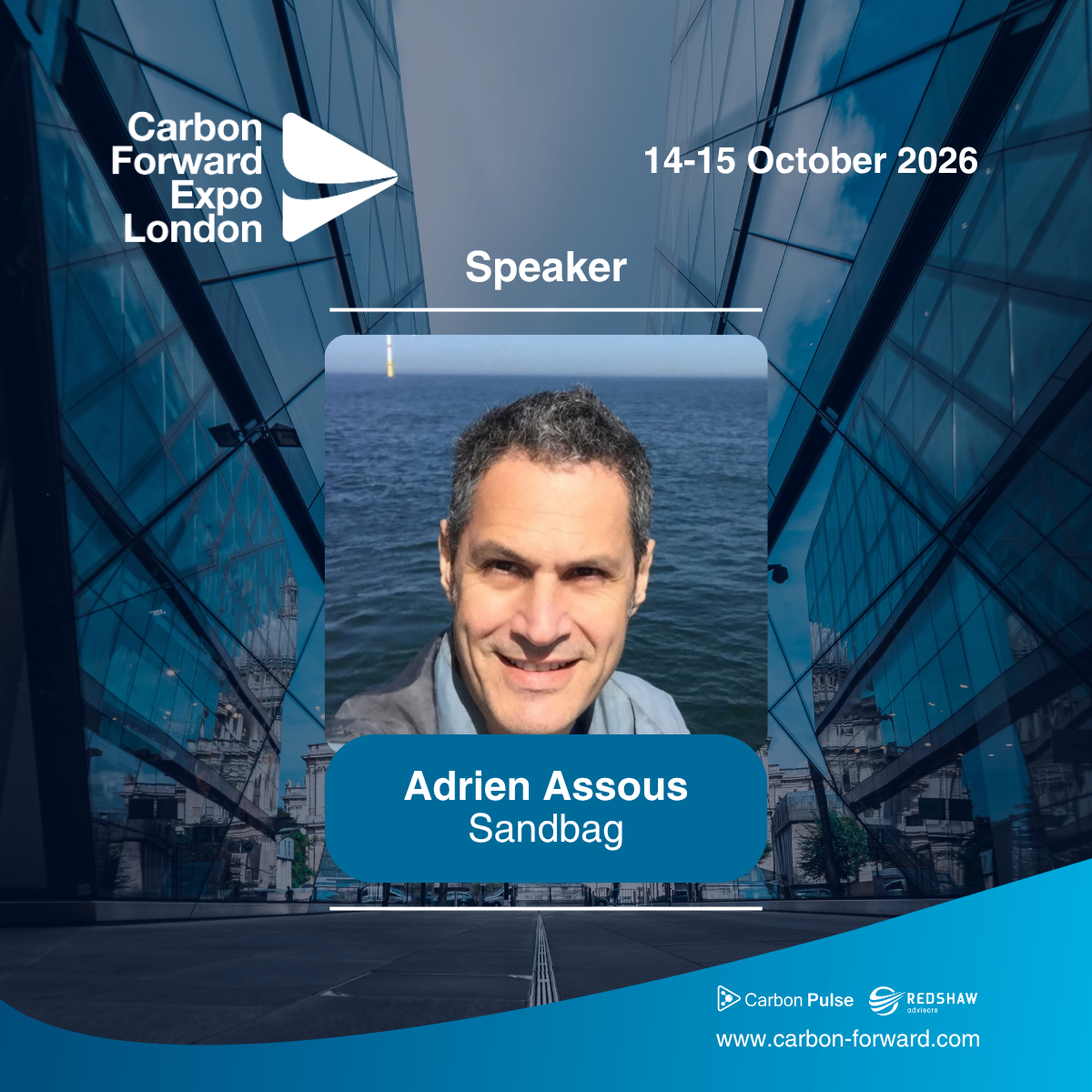
Talking about aviation at Carbon Forward Expo in London
On 14 October, Sandbag’s Adrien Assous moderated a panel, "Is the EU ETS delivering on its objectives? Will the proposed reforms help or hinder progress?", with Aurora D’Aprile from the International Emissions Trading Association, Ellen de Vocht, from European Energy Exchange, and Michael Evans from International Airlines Group.
|
|
The debate included an interesting exchange about how EU airlines pretend to risk losing market shares to foreign airlines due to EU carbon pricing, whilst admitting that carbon costs are equally passed through to customers by EU and foreign airlines, and therefore do not alter profits on EU routes.
|
|
|
|
|
Putting a seat belt on allowance use: how aviation could do its part
(2 September 2026)
Aviation has failed to stay within its ETS carbon budget for over a decade.
|
This policy brief proposes that access by airlines to emission allowances from other sectors should gradually be reduced. That would mean letting the price of emission allowances rise to meaningful levels for air transport to finally incentivise decarbonisation, and use the revenues from these higher prices to benefit the EU’s economy — perhaps via investments to rail infrastructure, reducing the cost difference between air and rail transport.
|
|
|
|
EU ETS amendments: what matters
(23 September 2026)
We analysed the proposals by the Commission and EU ETS rapporteur MEP Peter Liese at ENVI Committee. Based on this, we drafted a list of suggested amendments to improve the proposals made by the Commission and ENVI rapporteur.
|
On 25 September, we hosted a webinar presenting the findings of our analysis on the market’s supply and demand balance, as well as the list of amendments that we think matter the most. Hosting the webinar only two weeks after the ENVI rapporteur Peter Liese published his report on 11 September was important to feeding the debate and tested the speed and agility of Sandbag’s team! Attendees included representatives from governments, the Parliament, industry, media, and fellow thinktanks and NGOs.
|
|
|
|
EU ETS review: impacts on the market balance
(11 August 2026)
In this brief, we analysed how the changes proposed by the Commission will impact the supply and demand balance of the emission allowance market. The measures with significant impact are (1) raising the cap, (2) issuing up to 260 million allowances to purchase carbon removals, and (3) changing the rules governing the Market Stability Reserve (MSR).
|
|
|
|
CBAM: Sandbag’s efforts paid at the EU Parliament
A lot has happened on the CBAM front, too. On 15 September, the European Parliament voted to remove the “kill switch” Article 27a from the CBAM, which would allow the Commission to take imported products out of the CBAM scope. This comes after our calculations on fertiliser prices and recommendations were circulated extensively – not least by MEP Mohammed Chahim, rapporteur for the CBAM at the European Parliament.
|
On the same day, the Parliament adopted a position on anti-circumvention rules which echo recommendations that, for several years, Sandbag had been advocating for. The proposed text includes a definition of resource shuffling, the systematic ex-ante recourse to default values in case of high risk of abusive practices and a single default value for unwrought aluminium, regardless of it containing pre- or post-consumer scrap. Sandbag had flagged concerns about the scrap loophole as early as 2023, and recommended a more systematic recourse to default values.
|
The extension of the CBAM down value chains, proposed to various degrees by the Commission, Parliament and Council make no doubt that this loophole will soon be closed, too. The next important issue concerns the treatment of exports. On this front, the Parliament took initiative again with a proposal that creates a decarbonization fund within the EU ETS specific to exports. We have good reason to believe that the CBAM will no longer be threatened by any valid claims from within the EU.
|
|
From a third country perspective, we have shown that the CBAM is much less damaging than claimed, with our last report covering the specific case of India.
|
|
|
|
Address to Wopke Hoekstra
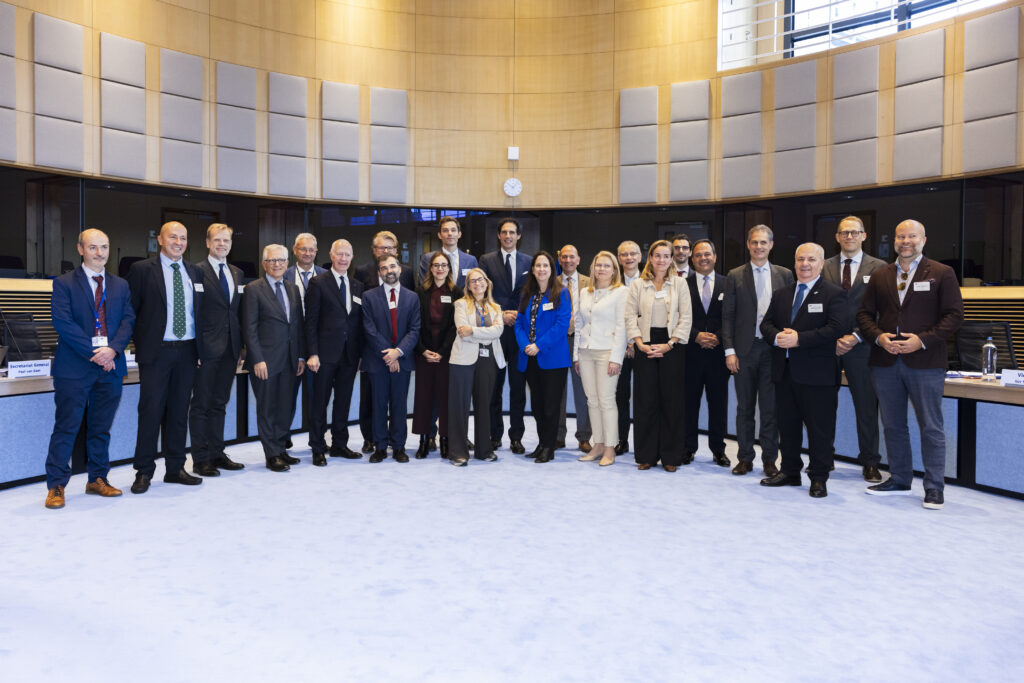
On 15 October, Sandbag was invited alongside a small number of stakeholders to participate in DG TAXUD’s CBAM Implementation Dialogue.
|
At the meeting, we stressed to Commissioner Wopke Hoekstra the importance of the CBAM as a source of revenue, both for EU firms and importers, as it allows the price of CBAM-covered goods to rise in the EU market. Other stakeholders present confirmed that this price increase is happening.
|
We further recommended that the EU begin assessing the case for extending the CBAM further down the fertiliser value chain to agricultural products such as meat and grains, in order to protect EU agriculture from rising fertiliser prices in the future.
|
|
More information on the Implementation Dialogue can be found here.
|
|
|
|
|
|
|
Webinar: CBAM’s real impact on India
On 4 August, we held a webinar to launch our report which analyses the CBAM’s impact for India based on our updated CBAM simulator. This report makes a granular assessment of India’s ability to remain competitive in the EU market under the CBAM.
|
The webinar provided an introduction to our report’s key findings, a tutorial for the simulator, and a panel discussion with Carolyn Fischer from the World Bank and Darshna Singh from CEEW, and Sangeeth Selvaraju, Policy Fellow at the Grantham Research Institute at LSE. Carolyn Fischer said: “I applaud this study. I think it’s an innovation over the prior art. I like that it’s looking into facility-specific emissions factors and production capacity, and also taking into account the price rise in the EU to estimate the degree of price compensation that firms exporting to the EU may get on their products.”
|
We also heard special remarks from Jonathon Carruthers-Green from steel data provider MEPS International on the CBAM’s impact on European steel prices.
|
|
|
|
Data tool updates
|
Our CBAM Simulator 2.0 was updated to take into account new data and policy proposals, such as the Commission’s scope extension proposal. We have also updated our EU ETS Simulator, with which you can compare the impact of the Commission and ENVI Rapporteur MEP Peter Liese’s design proposals, alongside our recommendations for a better EU ETS.
|
|
|
|
Sandbag in the News
|
(4 August 2026)
(4 August 2026)
(4 August 2026)
(4 August 2026)
(4 August 2026)
(4 August 2026)
(4 August 2026)
(4 August 2026)
(4 August 2026)
(4 August 2026)
(6 August 2026)
(10 August 2026)
(10 August 2026)
(10 August 2026)
(11 August 2026)
(18 August 2026)
(18 August 2026)
(21 August 2026)
(2 September 2026)
(23 September 2026)
(5 October 2026)
(8 October 2026)
(12 October 2026)
(28 October 2026)
|
|
|
You can read all of our publications on our website here.
|
|
|
|
|
|
|
We want to hear from you!
|
|
Do you have feedback on our newsletter? Let us know!
|
|
|
|
Stay informed on Europe’s decarbonisation journey — follow Sandbag for the latest analysis, insights, and policy updates.
|
Support our work!
|
|
|
|
|
 
|
|
|
|
|
|
